Curley
Curley, the boss's son on the California ranch where George Milton and Lennie Small find work, is a small, pugnacious man whose aggressive insecurity and possessive jealousy make him the primary antagonist of the novel's final, tragic movement. His relentless need to assert dominance—through physical violence, suspicion of his wife, and the enforcement of his social status—creates the conditions that lead directly to Lennie's death and the shattering of George and Lennie's shared dream. Curley embodies the petty, brutal authority of a world where the powerless prey upon the even more powerless, and his actions transform a fragile hope into a fatal pursuit.
Identity and Position
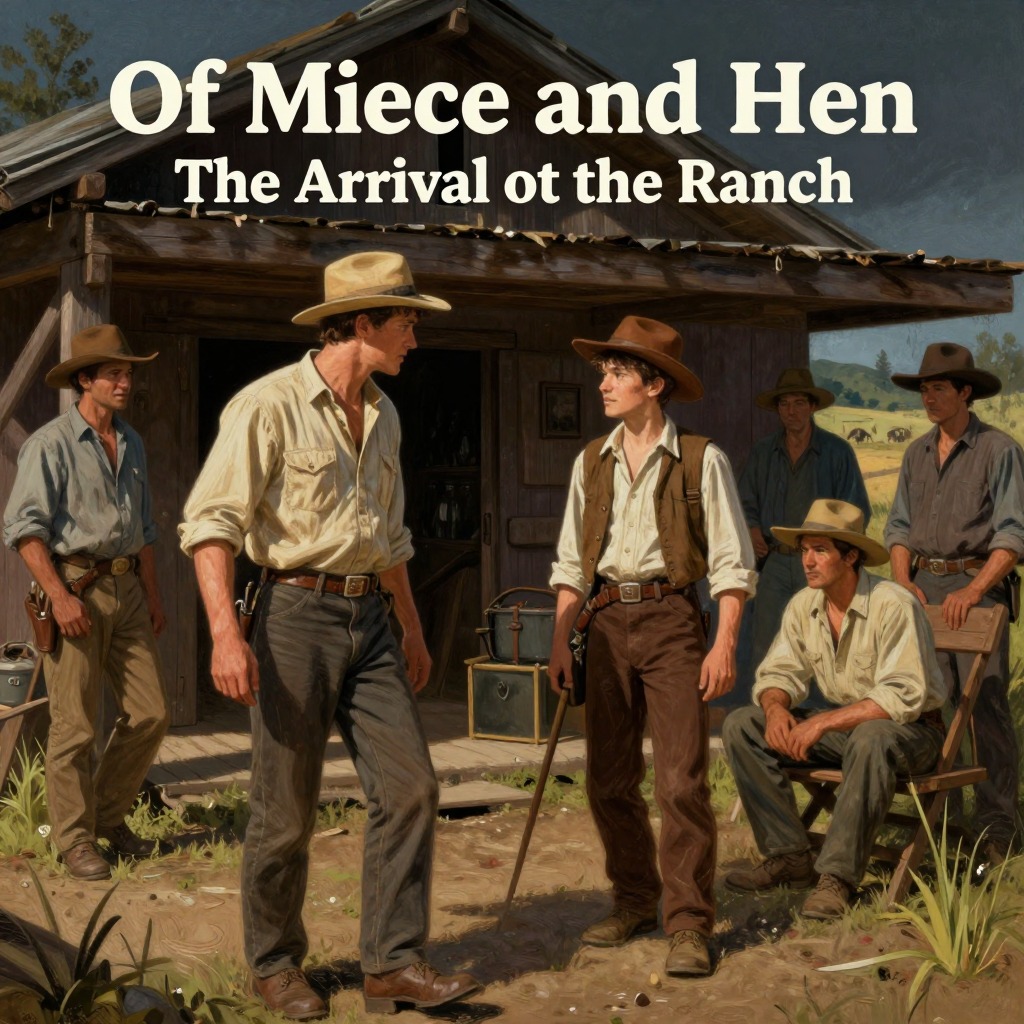
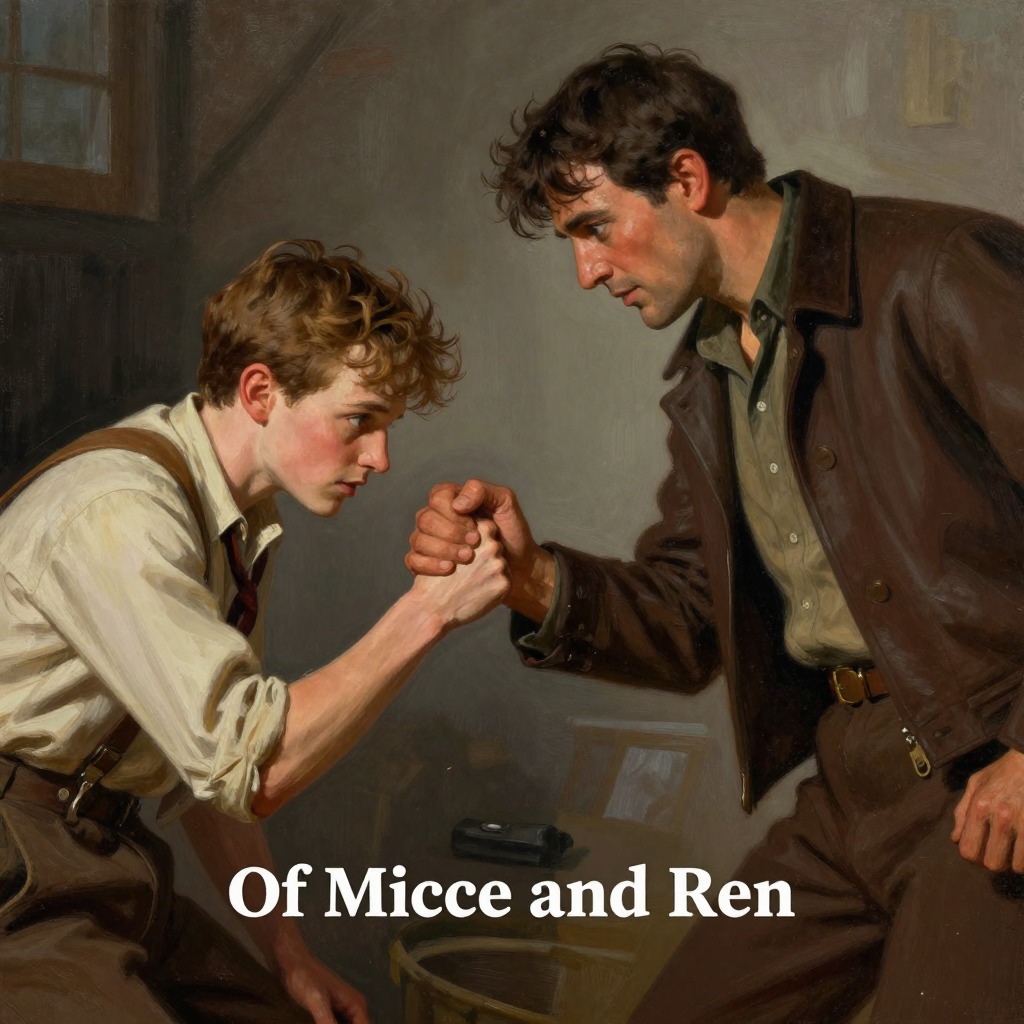
Curley is defined by his status as the boss's son, a position that grants him a petty authority he wields with constant, insecure aggression. He is a former boxer, a fact that fuels his need to prove his physical superiority, and he immediately targets the largest men on the ranch—a pattern that singles out Lennie. His marriage to a young, unnamed woman, whom he jealously guards, further amplifies his volatile temper. Curley's world is one of constant threat assessment: he must be seen as the toughest, his wife must be seen as his exclusive property, and any challenge to either must be met with immediate force.
Role in the Final Confrontation
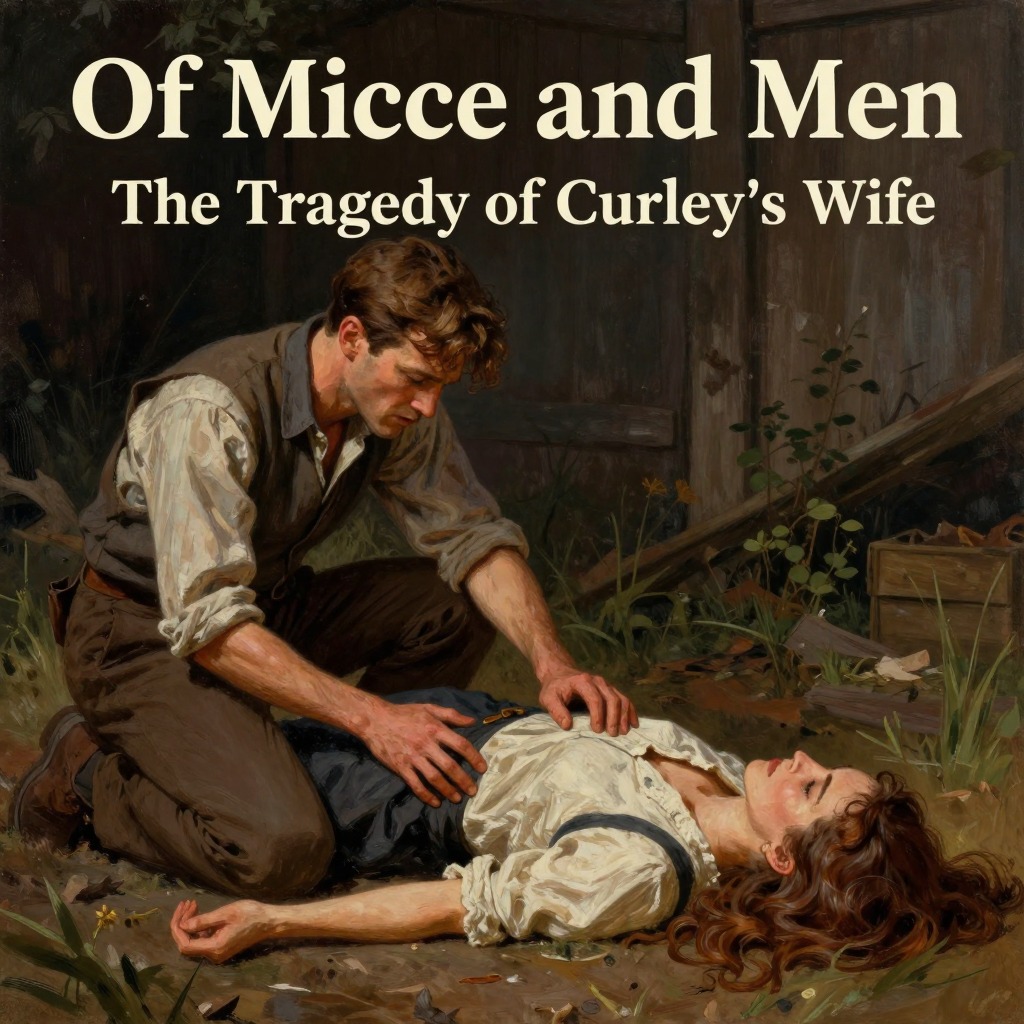
Curley's role in the novel's climax is that of the implacable pursuer. After Lennie accidentally kills Curley's wife, Curley organizes the lynch mob, leading the men with a cry of "Got him, by God" when he finds Lennie's body. He is the first to reach the clearing, and his first act is to examine the wound, noting with a kind of grim satisfaction that the shot was "Right in the back of the head." His presence transforms the scene from a private mercy killing into a public execution, and his relentless drive for vengeance leaves George no room to offer Lennie any other fate. Curley's need for retribution is absolute, and it is this implacability that forces George's hand.
Contrast with George and the Dream
Curley stands as the living antithesis of everything George and Lennie's dream represents. The dream of the little place—with its cow, pig, chickens, and rabbits—is a vision of mutual care, independence, and peace. Curley's world is one of suspicion, violence, and the constant assertion of hierarchy. Where George and Lennie's relationship is built on the promise that "I got you an'—" "An' I got you. We got each other," Curley's relationships are built on fear and control. The dream's promise that "Ever'body gonna be nice to you. Ain't gonna be no more trouble. Nobody gonna hurt nobody nor steal from 'em" is a direct negation of Curley's way of being. His very existence on the ranch proves that such a world is impossible, and his pursuit of Lennie is the final, brutal confirmation that the dream cannot survive in the reality he represents.
Thematic Significance
Curley functions as a concentrated embodiment of the novel's central themes: the corrosive effects of loneliness, the brutal economics of itinerant labor, and the impossibility of the American Dream for the dispossessed. His aggression is a symptom of a world where men have "got no fambly" and "ain't got nobody in the worl' that gives a hoot in hell about 'em." His status as the boss's son gives him a fragile perch above the other workers, but it does not grant him security or happiness. Instead, it makes him a tyrant in a small kingdom of dust and bunkhouses. In the end, even after his vengeance is satisfied, Curley is left with nothing but his own emptiness. As Carlson asks, "Now what the hell ya suppose is eatin' them two guys?"—a question that reveals Curley's fundamental incomprehension of the bond he has helped destroy. He is the victor of a battle he cannot understand, and his victory is a hollow one.